There’s a lot of talk lately about the Customer Journey and its importance in online marketing strategy. But what is it, and how does it affect our eCommerce? Below I outline some key concepts to better understand how it works and how it can affect our online business.

What is the Customer Journey?
The Customer Journey, or Buyer Journey, is the path a customer follows across the various touchpoints during the purchase process.
Every business has a Customer Journey that it needs to know inside out in order to improve the process and increase revenue. It allows us to monitor behavior and identify the needs and problems customers have during the purchase process.
Online, to improve conversion and boost sales, you need to create a Customer Journey for each of the company’s products and services.
Defining the Customer Journey is fundamental to your online marketing strategy.
Stages of a Customer Journey
There are 4 well-defined stages:
#1 Attract
This means driving traffic to the store.
There are different options:
- Medium- to long-term SEO strategy
- Running Google Ads and Social Ads campaigns
- Email marketing actions
- Social media
- Affiliate marketing
- Content marketing
The most important thing is to measure the results of each acquisition channel to know its conversion rate and ROI.
This lets us optimize our online marketing budget, prioritizing the channels that deliver the best ROI and fit our strategy to meet the goals we’ve set.
#2 Convince
Once the customer is in our store, we have to convince them of the advantages and benefits of buying on our website rather than from competitors.
Users may weigh many factors when deciding to buy: product quality, price, customer service, security, shipping options and costs, payment methods, other customers’ reviews and ratings, after-sales service and guarantees, among others.
On the website side, product listings, product pages and campaign landing pages need to be handled professionally.
#3 Sell
This is arguably the most important stage, since in eCommerce conversion is the main business goal.
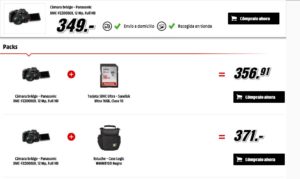
To achieve it, it’s important to use certain tools or strategies: product recommendations for cross-selling and upselling (home, product page and checkout), abandoned cart recovery, on-site and off-site retargeting, remarketing, customer service chat, offering plenty of payment and shipping options (home delivery, in-store pickup, pickup points), etc.
At this stage, behavioral targeting and marketing automation strategies can be implemented to optimize conversion based on what we know about users’ behavior and transactions.
#4 Retain
Once a customer has bought from our store, we need to give them personalized attention so they keep coming back over time.
Loyalty strategies can be implemented: memberships, discount vouchers, purchase rewards, special discounts, referral benefits, etc.
At this stage, email marketing strategy and marketing automation are very important.

What is a Customer Journey Map?
A Customer Journey Map is a Design Thinking tool that maps every interaction and touchpoint between the customer and the company throughout the purchase process.
It helps us build a good customer experience by uncovering the best attraction, conversion and retention actions to increase sales and business volume.
In other words, it’s a diagram that describes a customer’s interactions with the company from the attraction stage to the retention stage.
The map aims to empathize as much as possible with the customer, to understand how to meet their needs at each stage of contact with the company, making it possible to choose the best actions for each one.
Steps to design a Customer Journey Map
There’s no single model for creating a Customer Journey Map, since each product or service has a different life cycle for the customer.
The steps below are the most commonly recommended, but they will need to be adapted to each case.
#1 Research
The first thing we need to do is get to know our customer in detail. Know who our product or service is for, both in terms of strictly personal and demographic data (age, gender, location) and in terms of feelings and emotions (motivations, behavior, habits, tastes, needs, preferences, etc.).
To do so, we need to define who they are, gathering as much data as possible to build our buyer persona. If the customer isn’t well defined, the user experience we design won’t work.
Information can be gathered in different ways:
- Online research
Social media analysis to understand behavior (likes, comments, how they interact, activity, friends, content they like, etc.). - Personalized research
Customer interviews and surveys.
There are different types of surveys that go beyond the usual format, since in many cases we can assume customers don’t know what they want or won’t tell us what they really feel. Once all the information has been gathered and classified, we move on to the next step.
#2 Defining the buyer persona
Once the information from the first step has been gathered, classified and analyzed, we need to define a picture of the customer to serve as our working basis.
Defining the buyer persona means summarizing the most important traits of our ideal customer in a set of characteristics (demographics, behavior, needs and motivations).
The buyer persona is one of the most important elements of inbound marketing.
#3 Planning the stages
It’s important to analyze the different stages of the process and identify which ones need attention.
#4 Action plan
Once the buyer persona and stages are defined, it’s time to take action and improve everything needed for users to feel confident and satisfied throughout the purchase process.
If the customer or buyer persona isn’t well defined, the user experience we design won’t work.
A Customer Journey Map example
A recent Google study in the US found that only 13% of the budget invested in direct media goes to mobile advertising. Many assets and content used in digital advertising aren’t optimized for mobile phones.
This is something very important to keep in mind when adjusting and optimizing our campaigns and actions based on our buyer persona.
To make it clearer, here’s an example of a Customer Journey Map for a customer who wants to buy a pair of shoes.
#1 Stages
-
-
- Awareness
- Consideration
- Acquisition / Purchase
- Service
- Loyalty
-
#2 Detailed steps
-
-
- Intends to buy shoes
- Clicks on ads and lands on the landing page
- Browses the online store
- Goes to checkout
- Buys and reaches the thank-you page
- Waits for shipping and order status notifications
- Receives the purchase
- Tries on the shoes and the size is wrong
- Wants to return the shoes but doesn’t understand the process
- Calls the customer service line
- Completes the product return process
- Waits for return confirmation
- Waits for the refund
- Receives a review request email
- Rates the experience
- Uses a €10 coupon on a new purchase
-
#3 Touchpoints
-
-
- Ads
- e-Shop
- Blog
- Banner
- Newsletter
- Landing page
- Form
- Product page
- APP
- e-Shop
- Category page
- Product page
- Shopping cart
- Login / sign-up
- Form
- Payment methods
- Shipping options
- Thank you page
- Shipping status updates and information
- Web login
- Packaging
- Invoice
- Order
- Product
- e-Shop
- FAQ
- Terms and conditions
- Customer service
- Packaging
- Return label
-
#4 Company departments and suppliers involved
-
-
- Marketing / Online Marketing
- Design / Content
- e-Shop management
- Product management
- Administration / Accounting
- Legal
- Payment providers
- Logistics providers
-
At TLG Commerce we offer a wide range of online marketing services and have a multidisciplinary team of highly qualified professionals.
If you need advice or more information, don’t hesitate to get in touch with us; we’ll be happy to help.
Images: Pixabay, Bright Vessel, M4Comm