
AI orchestration for businesses
Get your AI agents working as a team
We coordinate agents, models and business systems in reliable flows, connected to your ERP and CRM, with human oversight and traceability of every decision.
They trust Trilogi
See clients






Artificial Intelligence
Orchestrating AI: from isolated pilot to a system that works
Many companies already use AI: a chatbot here, a writing assistant there, a script that sorts emails. The problem comes when they want it all to work together with real business data. AI orchestration is the layer that decides which agent or model acts at each step, what data it uses, which systems it connects to, when a person steps in and how everything is logged. At Trilogi we design and implement that layer using our integrations hub, built with AI and designed to be used with AI, which connects your agents to ERP, CRM, PIM and eCommerce from a single source of truth.
- Consulting
- AI
- Marketing
- Design
- Technology
since 1999
AI in action
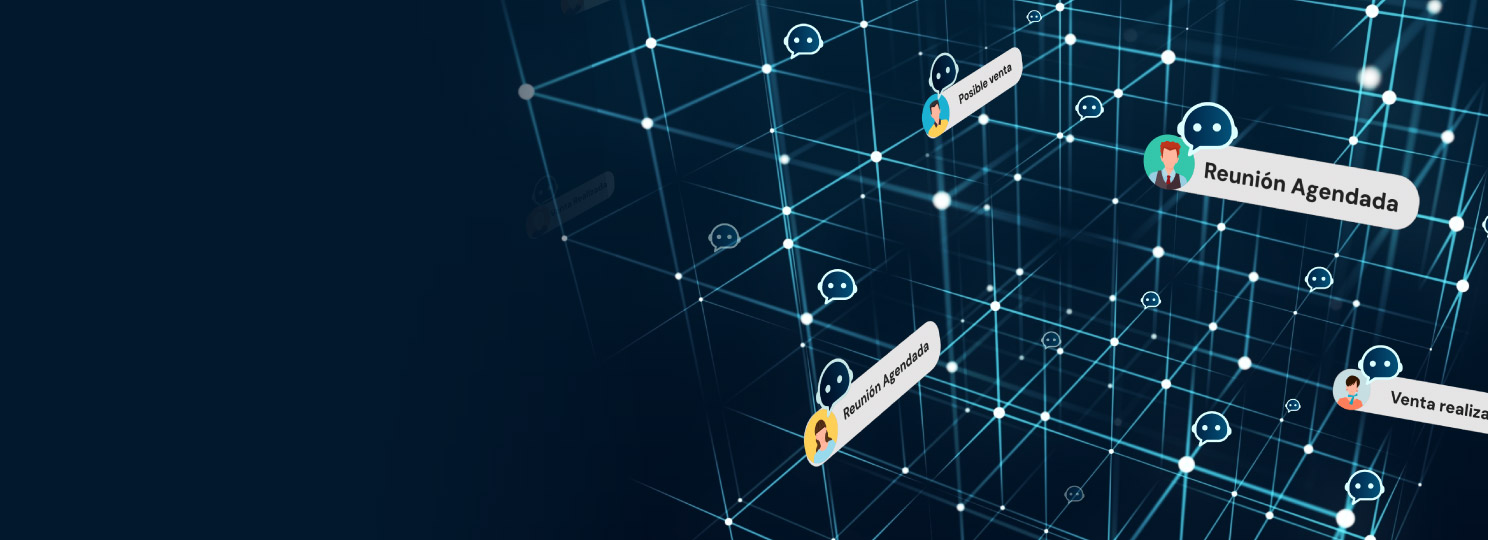
Several agents, one team
Orchestration coordinates models, agents and systems so they work together on end-to-end processes.
Illustrative examples of how our agents work. Every project is tailored to your systems and processes.
The challenge
Problems AI orchestration solves
- Symptom 1
Pilots that don’t scale
AI tests that work in a demo but never reach production because they don’t integrate with real processes.
- Symptom 2
AI without access to your data
Agents that give generic answers because they can’t look up orders, stock, customers or pricing.
- Symptom 3
Lack of control
Nobody knows exactly what an agent did, with what data or why, and that holds back adoption.
- Symptom 4
Disconnected tools
Each department uses its own AI, with duplicated costs and no way for a task to move from one system to another.
Many loose AIs don’t make a system
What we do
What we do in AI orchestration
Design, integration and governance of AI systems that work in coordination.
Multi-agent flow design
We break a process into tasks and assign each one the right agent or model. We define how they hand off information and when each step ends.
Connection to ERP, CRM and eCommerce
We connect agents to your systems through the AI integrations hub. They can query and, when authorized, act on real data.
Model selection and combination
We choose the best model for each task based on quality, cost, latency and privacy. We’re agnostic in AI too.
Human oversight
We define approval points, thresholds and escalations to people. AI proposes and executes the routine; your team validates sensitive decisions.
Traceability and governance
We log every step, every data point queried and every decision made. We apply permissions, security controls and regulatory compliance criteria.
Monitoring and improvement
We measure quality, times, costs and errors for each flow. We continuously fine-tune instructions, models and rules.
How we work
How we implement AI orchestration
Process map
We identify the processes where coordinating multiple AIs and systems delivers the most value with the least risk.
Architecture
We design agents, models, connections, permissions and human oversight points.
Controlled pilot
We deploy a first flow in a limited environment and measure results with your team.
Go-live
We scale the flow with full monitoring, traceability and documentation.
Evolution
We add new flows and agents on the same foundation, without starting from scratch each time.
What’s included
What the AI orchestration service includes
Who it’s for
Who this service is for
Companies with AI pilots
Organizations that have already tried AI and want to take it into production in an orderly way.
Operations with many systems
Companies with ERP, CRM, eCommerce and other tools that need AI to work across them.
Leadership that demands control
Leadership teams that want to harness AI without losing traceability or oversight.
Keep exploring
Related services
Frequently asked questions
What we’re often asked.
What is AI orchestration?
It’s the coordination of multiple agents, AI models and business systems to complete processes from start to finish. The orchestration layer decides which component acts at each step, what data it uses, when a person should step in and how each action is logged. It lets you move from isolated AI tools to systems that work together.
What is a multi-agent system?
It’s a system in which several AI agents, each specialized in one task, collaborate to handle a more complex process. For example, one interprets a request, another queries the ERP, another prepares a proposal and another reviews it. Splitting the work improves quality, makes control easier and lets you improve each piece separately.
How is it different from AI agents or automations?
An AI agent handles a specific function, like answering inquiries or qualifying leads. An automation runs fixed rules between systems. Orchestration is the layer above that coordinates several agents, models and automations in the same process, with shared data, human oversight and traceability. It’s usually the next step once you have several pieces running.
How does AI connect to my ERP or CRM?
Through our integrations hub, built with AI and designed to be used with AI. It exposes your systems’ data and actions securely and with controlled permissions, so agents can look up orders, stock, customers or pricing, and act only when authorized. That way you don’t need to connect each agent to each system separately.
How is human control over AI guaranteed?
From the design stage we define which decisions AI can make on its own and which require approval, with clear thresholds and escalations. We also log every run: what data was queried, what was decided and who validated it. That way your team can audit the system, correct it and trust it.


Next step
Our business is to grow yours
Tell us which processes you want AI to handle and we’ll design how to coordinate it with your systems.