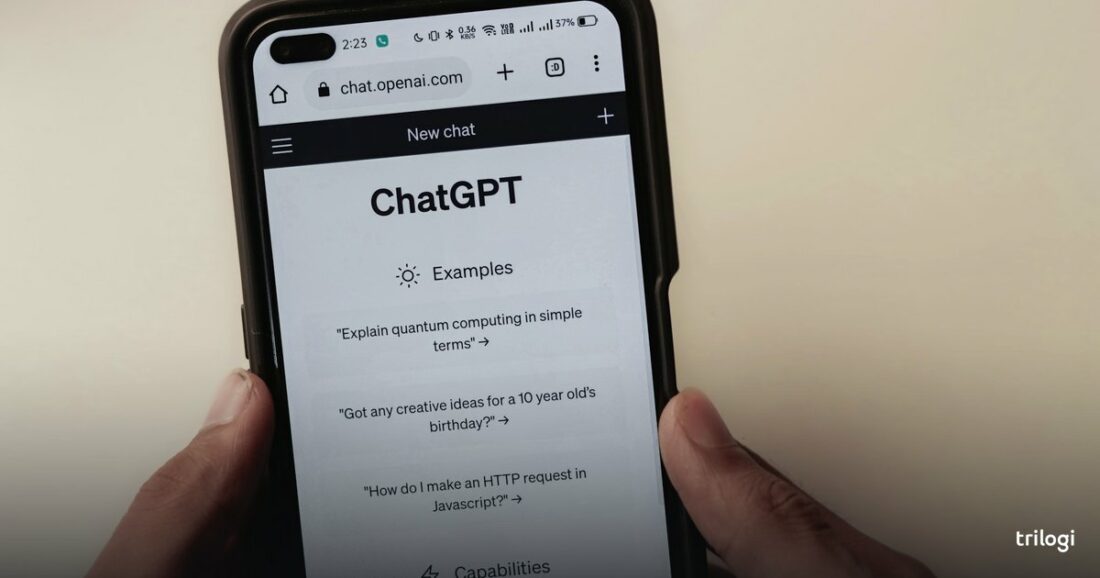
Google has started showing a «Message» button next to «Call» on Google Maps business listings, taking customers straight to WhatsApp or an SMS chat. For a company with stores, offices or showrooms, that turns every listing into an entry point for written enquiries. Availability in Spain is not yet confirmed, but the question for management is no longer technical: who answers those messages, how fast, and how they turn into sales.
What Google has announced
On 5 November, Google published its bulletin for small and medium-sized businesses with several Business Profile updates. The Business Profile is the listing that appears on Google Maps and in search when someone looks for a nearby store or service. Two changes matter most for a leadership team.
First: in the Google Maps apps for Android and iOS, businesses with the chat option enabled now show a prominent «Message» button right next to «Call». The customer taps it and lands in WhatsApp or an SMS with the business. If a company sets up both options, only SMS is shown. Google says the feature is available in «select regions» without naming them; in the United States, chat has been live since early 2025.
Second: the listing can now be managed from Gemini, Google’s AI assistant. The person in charge can ask in plain language to update opening hours (Google fills in the fields and the person reviews them before saving) and upload photos or videos from the conversation. Access is being extended to corporate Google Workspace accounts, provided the administrator first enables Gemini for the company. There are limits: one verified profile per owner or manager, and only through the Gemini web app. In October, Google’s help page excluded the European Economic Area and the United Kingdom; that exclusion has now been removed and the feature is listed as available wherever the Gemini web app works, although the documentation still contradicts itself on business accounts.
The bigger picture: the local listing stops being a shop window
For years the Business Profile has been a visibility asset: address, opening hours, reviews and phone number. With a messaging button front and centre, it becomes a commercial touchpoint, just like the website form or the switchboard. And it does so on the channel Spanish customers use every day: WhatsApp.
At the same time, Google is bringing its AI into listing management. The direction is clear: less manual work to keep data up to date, and more direct interaction between customer and business inside Google’s platforms. Companies that look after their listings will win enquiries; those that don’t will lose them in full view, because a broken link or an unanswered chat sits in one of the most visible buttons on the listing.
Why it matters to your business
Many store enquiries never become phone calls: the customer wants to know if a size is in stock, whether they can pick up today, or if the office sees people without an appointment. Writing is easier than calling, especially outside opening hours. A well-handled message button can recover some of the sales that are lost silently today.
The risk is the opposite. If messages land on a phone nobody checks, on a store manager’s personal number, or on a WhatsApp account with no hours or automatic replies, the experience gets worse and the negative review comes quickly. For a chain with ten or twenty locations, the problem multiplies: each listing may end up on a different channel, with no record of what was promised to the customer and no data on how many sales it generates.
For example (illustrative case): a home décor chain with twelve stores receives enquiries via Maps. If each store replies from its own phone, nobody knows how many enquiries become a visit or an online order, and management cannot decide whether the channel is worth reinforcing.
What to check now
- Who answers: decide whether messages are handled by each store, a central team, or an AI assistant that resolves the routine questions and passes anything that needs judgement to a person.
- Which number it goes to: a company WhatsApp Business account connected to your customer service tool is better than personal phones.
- How it is measured: tag each conversation with «Google Maps» as its origin so you know how many enquiries arrive and how many end in a sale.
- Whether it is already available for your listings: Google says the way to find out is to try adding the chat option in the profile’s contact details. It is worth checking listing by listing.
- Who manages the listings: if you use Google Workspace, decide before enabling Gemini who can change hours, photos and details, so changes don’t happen without control.
How we approach it at TRILOGI
We treat it as one more sales channel, not a listing tweak. First we review all of the company’s listings (details, hours, linked number and whether the chat option is already available). Then we connect the message button to a single company WhatsApp Business account, integrated with the rest of customer communication, with quick replies for the usual questions (stock, hours, pickup, appointments) and a handover to a person when needed. And we measure: how many conversations come from Maps, how long it takes to reply and how many end in a visit or an order. It is the same approach we use for the email, WhatsApp and SMS channel: every message has an owner, a response and a measurable result.
When Google switches the button on in Spain, the difference will not be having it, but having it ready.
Every Tuesday, the 5 news stories that matter: subscribe to the newsletter