Online selling is emerging as a new channel for luxury goods, especially in fashion, cosmetics and beauty, giving manufacturers in these sectors a great opportunity to sell their products through eCommerce platforms and expand their potential customer base.
Chinese customers account for 32% of luxury spending worldwide (almost a third), and 40% of Chinese women’s total luxury spending goes on handbags, with a clear boom in cosmetics and personal care products. By 2020, China’s luxury consumer base is expected to grow from 80 to 180 million consumers.

How is the luxury sector evolving in China?
By the early 2000s, the luxury market had already exploded in China, driven by spending from officials and corrupt party members, who contributed 25% of total spending.
In early 2012, the country experienced an economic slowdown due to several factors:
- Xi Jinping’s rise to power and the enforcement of tough anti-corruption measures within the party.
- A high rate of high-quality counterfeits.
- High import tariffs.
As a result, only 8% of Chinese consumers buy luxury goods in China, which also led to the creation of the Daigou (代购) market.
The Daigou market is a business model in which someone living or traveling abroad buys products there and imports them directly into China, since luxury prices can be higher in China than overseas.
Why did the Daigou market emerge and how does it work?
The Daigou market grew out of Chinese consumers’ widespread desire to buy luxury goods. In fact, this need dates back to 2008, following a scandal involving a Chinese infant formula manufacturer that made hundreds of thousands of babies and young children ill, some of whom even died after consuming powdered milk contaminated with toxic chemicals. This led Chinese consumers to buy powdered milk in other countries.

What happened with luxury goods? Just as with powdered milk, consumers trusted the original products of foreign luxury brands more than local ones, due to the high rate of quality counterfeits made in the country.
These Daigou, who are often international students and therefore have no language barrier, operate in a legal gray area and rely solely on private transactions. Notably, Daigou use social media platforms such as Weibo and WeChat to sell luxury items, earning net commissions on each purchase while cutting import costs and customs paperwork.
In response, the government has begun introducing measures to boost domestic spending in China, keeping money in the country and encouraging brands to generate revenue there.
In short, the luxury buying business is facing stricter controls from regulators, creating uncertainty across the global luxury industry.
An important date in the history of luxury consumption in China was September 28, 2018, known as the 928 Crackdown, which took place at Pudong International Airport in Shanghai. All passengers returning from Seoul, one of the most common places where Daigou can buy global-brand items at big discounts, were stopped at Chinese customs for luggage inspection; many had to pay heavy fines and were found guilty of illegal imports.
What is happening today with luxury brands selling in China?
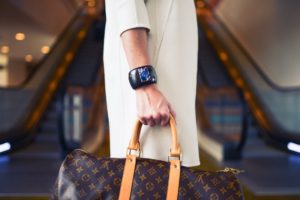
With all these regulatory changes and the harmonization of luxury prices in China, eCommerce platforms are growing to fill the gap. In fact, major brands such as Hermès, Gucci and Louis Vuitton are leaving cross-border marketplaces like TMall to create their own online stores to sell in China, without forgetting other strategies such as WeChat.
Set to soon become the leading country by number of online purchases, China is without doubt a land of opportunity, although it requires solid market research, a well-defined strategy for China and, above all, a lot of patience.
If we want to sell online in China, we need to consider a range of cultural, legal and tax issues, and we also need a clear understanding of how the eCommerce channel operates in that country.
If you’re interested in selling in the Asian market, don’t hesitate to contact us.