In China, some shoppers are already using AI to fake photos of broken, torn or spoiled products, collect the refund and keep the goods. For senior management the takeaway is simple: if your claims process accepts a photo as proof, AI has just made after-sales fraud cheaper, and that process deserves a review before the pattern reaches your own returns.
What happened
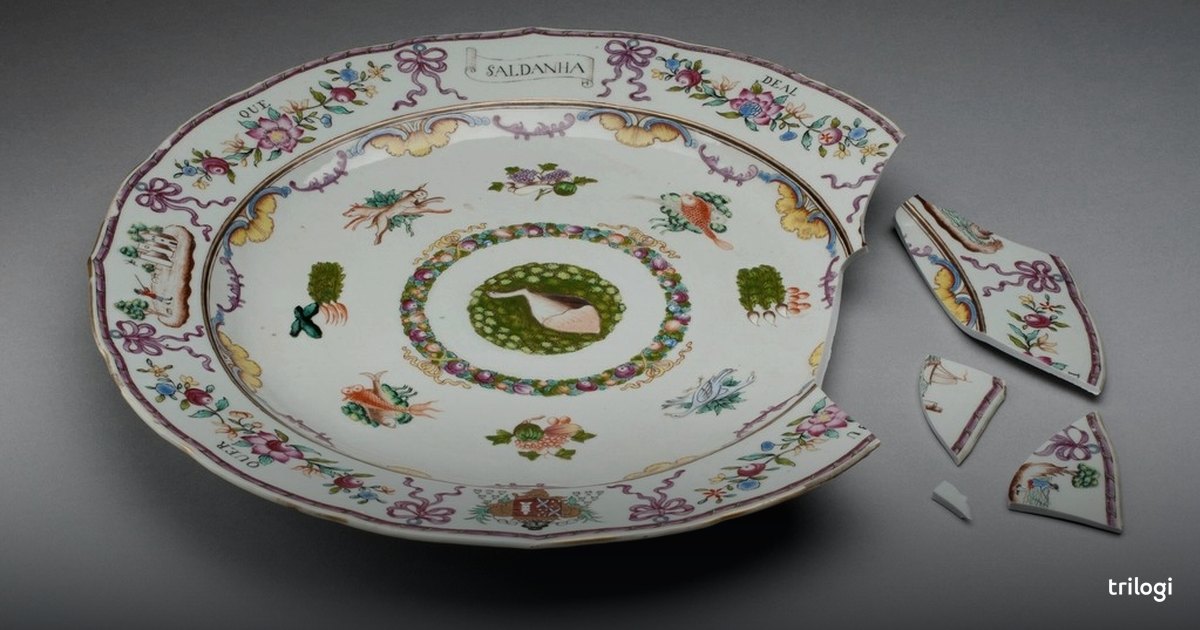
Local press in Hunan documented this November a practice online merchants already know first-hand: customers who edit a photo of their order with AI to simulate damage (a plate with a crack, a garment with a tear, food with mould) and claim a “refund only”, where the buyer gets the money back without returning the product.
The published cases show the scale of the problem:
- In Hengshan County, a man faked images of spoiled fruit with AI and filed more than 100 claims in four months, worth over 16,000 yuan. He did not throw the fruit away: he resold it cheaply. He has been convicted of fraud and sentenced to one year in prison.
- A food company in the Xiangjiang area received 13 claims from the same consumer, with AI-edited photos and pressure on social media, and lost more than 7,000 yuan. The customer was detained by the police.
- A fresh-meat store found that the “evidence” of a mouldy steak was a generated image: the Chinese characters on the label came out garbled. A pet-toy seller noticed that the “broken” ends of the product lacked the real texture of the material.
The fact that should worry any eCommerce manager most: according to the reporting, some platform systems still approve the refund automatically even when the seller has spotted the deception and refused it. In that case, the merchant takes the loss.
The bigger picture
Earlier this month, a survey published in China showed the other side of the coin: 89% of consumers polled see AI-retouched product photos from brands as deceptive. Now it is the customer using the same technology against the seller. A photo is no longer reliable proof in either direction.
This is not an exotic phenomenon. Tools that add a realistic crack to a photo in seconds are free and on every phone, in Europe too. And many European after-sales processes were designed on a premise that no longer holds: “if the customer sends a photo, the claim is real”. The faster and more automated the refund (which, on the other hand, improves the experience of honest customers), the cheaper it is to abuse.
Why it matters to your business
The impact hits margin directly. Every refund without a return turns a sale into a full cost: product, shipping and handling. In low-ticket, high-turnover categories (food, home, accessories, cosmetics, pet products) the fraud per order is small and goes unnoticed, but it adds up. The Hengshan case is over 100 orders from a single customer before anyone stopped it.
There is also an operational risk: if your customer service team blindly tightens the rules to curb abuse, the one who suffers is the honest customer, who is the vast majority. The management challenge is not to distrust everyone, but to tell the cases apart.
What to do
A few questions management should be able to answer today:
- What share of last year’s claims was settled with a refund and no return, and for what amount?
- Do we spot customers with repeat claims, or is every claim treated as if it were the first?
- Do we keep proof of how each order left the warehouse (photo or video of the packing, weight)?
- Which part of the process is decided by a person and which by an automatic rule, ours or the marketplace’s?
With those answers the policy can be graded: instant refunds for customers with a good track record and low amounts, and extra checks (a video, a photo with a code we request at that moment, or a physical return) when a high amount, a new customer or repeat claims come together.
How we approach it at TRILOGI
We would treat it as an after-sales workflow, not as a standalone tool. An illustrative example: a tableware store receives dozens of photos of broken plates and glasses every week. With an AI automation connected to the online store and the customer service system, each claim arrives with its history (the customer’s previous orders and claims, amount, shipping method), the image is analysed for signs of manipulation and checked against the photo of the order taken in the warehouse. The system does not reject anyone: it sorts. Clean claims are resolved on the spot and only doubtful ones reach a person on the team, with all the information at hand.
That way honest customers still get a fast answer, the team spends its time on the few cases that deserve it, and management gets, for the first time, a reliable figure for what after-sales fraud is costing it.
Every Tuesday, the 5 news stories that matter: subscribe to the newsletter